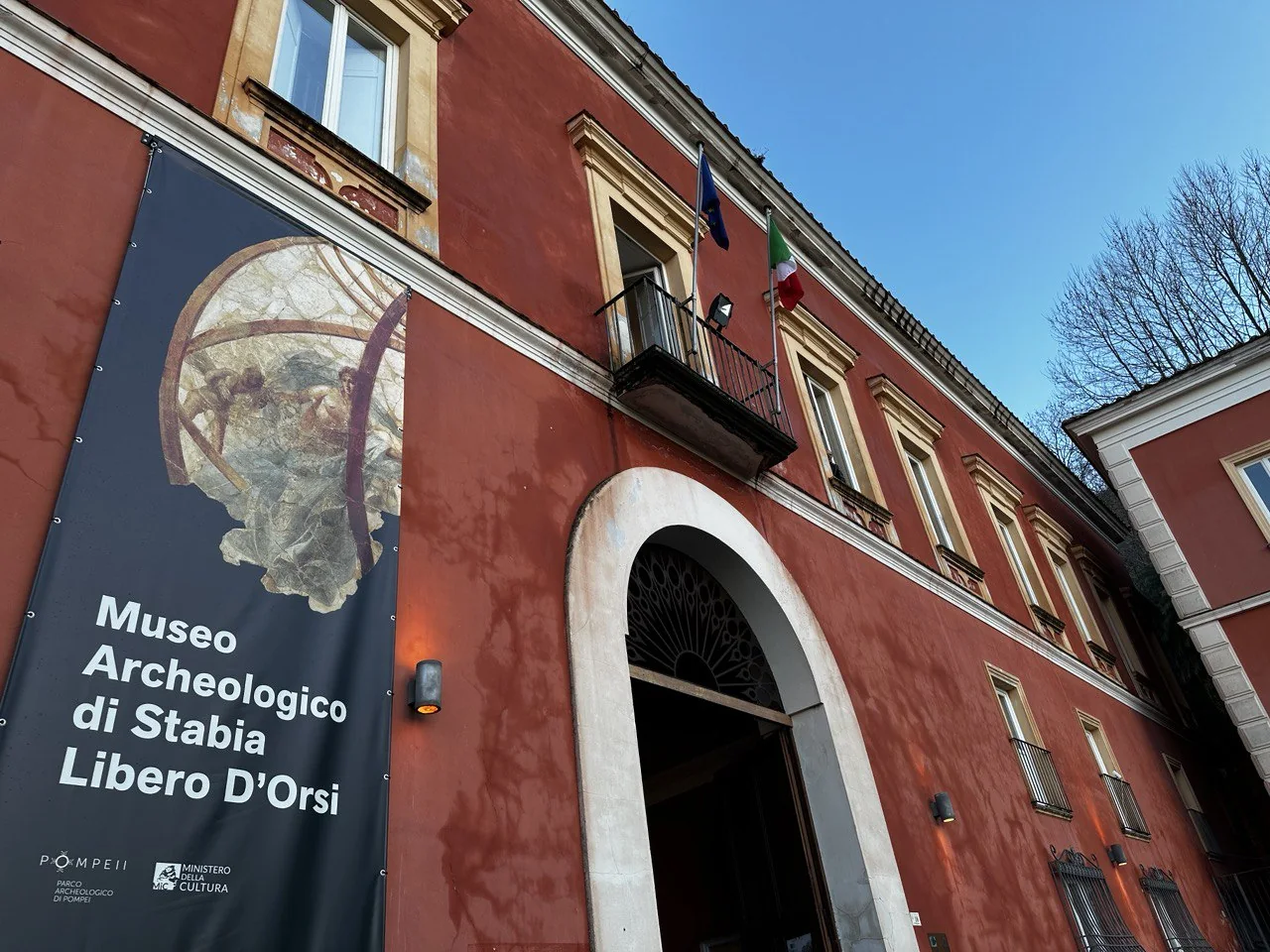
Reggia di Quisisana — Castellammare di Stabia
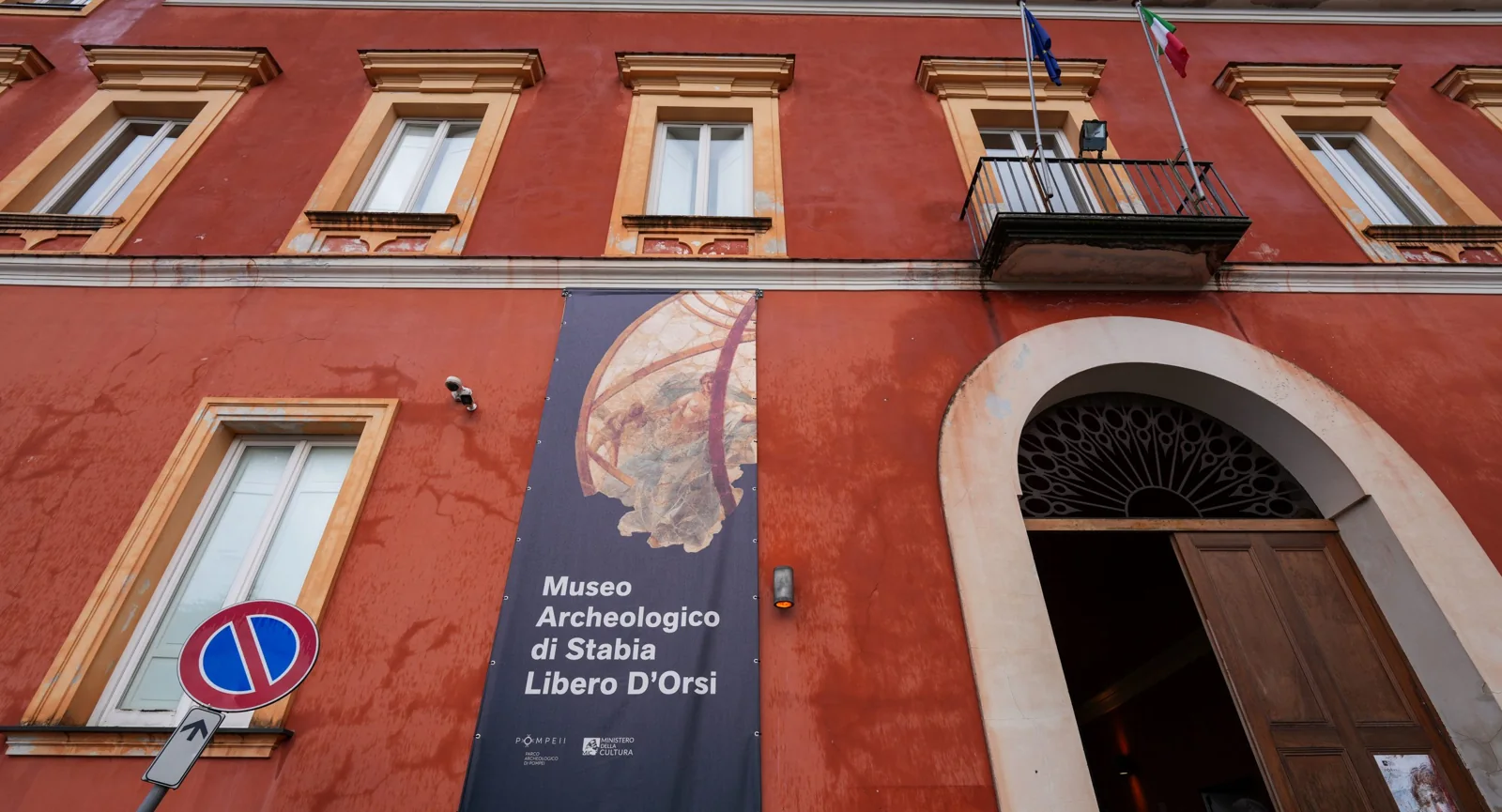
Archaeological Museum
Libero D'Orsi
507 artefacts from Stabian villas: frescoes, sculptures, bronzes and ceramics, in the historic Bourbon residence overlooking the Bay of Naples.
The Museum
Twice destroyed, twice reborn
Ancient Stabiae is a Roman archaeological site, home to important maritime villas with luxurious decorative features. In 79 AD it was destroyed by the eruption of Vesuvius, but unlike Pompeii and Herculaneum, Stabiae was reborn. Its strategic position and routes by sea and land saved it from oblivion.
Wall paintings
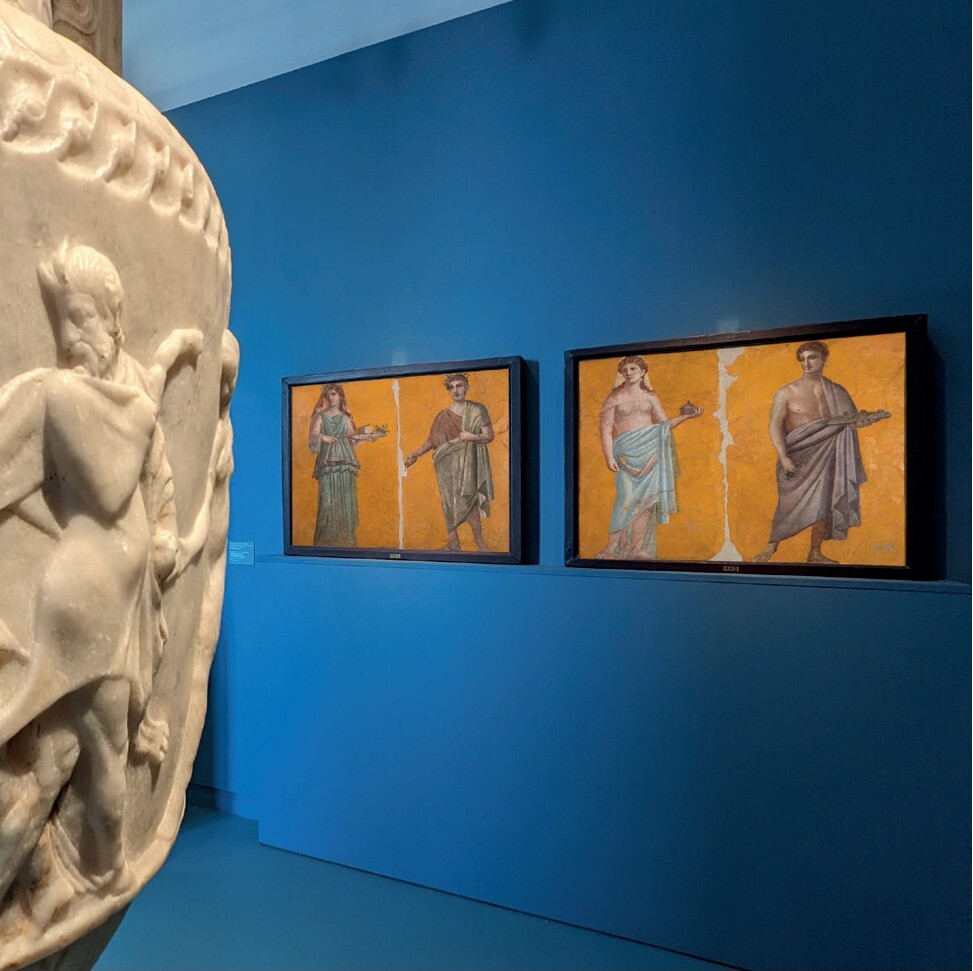
Frescoes from Stabian Villas
Splendid frescoes depicting deities, mythological figures and faces, perhaps belonging to homeowners, seen in their intimacy, absorbed and thoughtful.
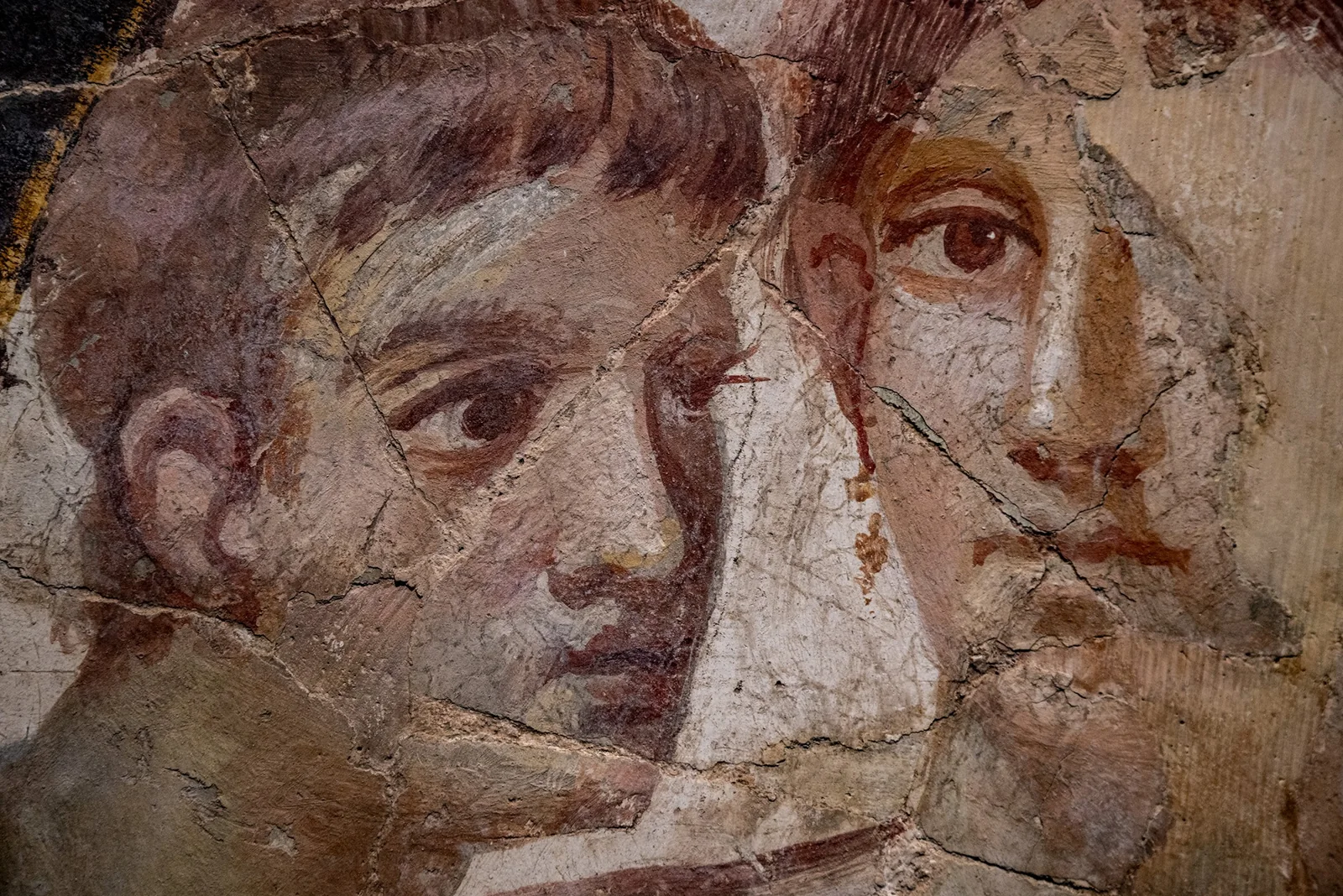
Villa di Carmiano
The Triclinium
Dionysian-themed paintings evoking wine production
The Headmaster
Libero D'Orsi (1888–1977)
In the 1950s he undertook the rediscovery of the Stabian Villas, already partially explored during the Bourbon era. A multimedia diary with his voice, photos and notes accompanies visitors today.
Collection
The Stabian Villas
The museum displays the refined decorative features from the villas of Stabiae and its ager, the agricultural territory spanning the municipalities of Gragnano, Casola, Santa Maria La Carità and Sant'Antonio Abate.
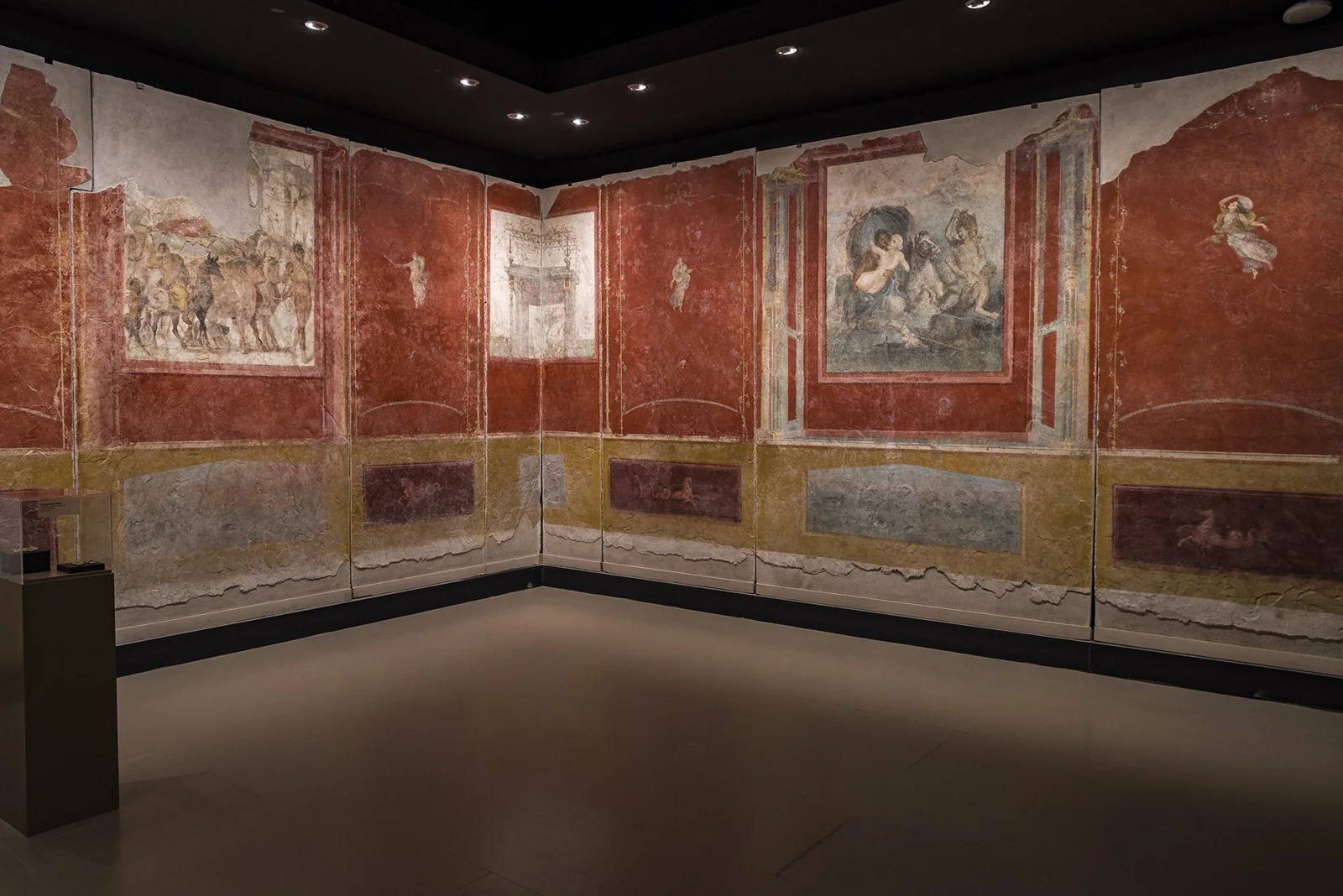
Villa San Marco
At 11,000 sq m, one of the largest residential villas in Stabiae, with extraordinary decorative features.
Villa Arianna
The famous bronze chariot, displayed for the first time with all its original fittings.
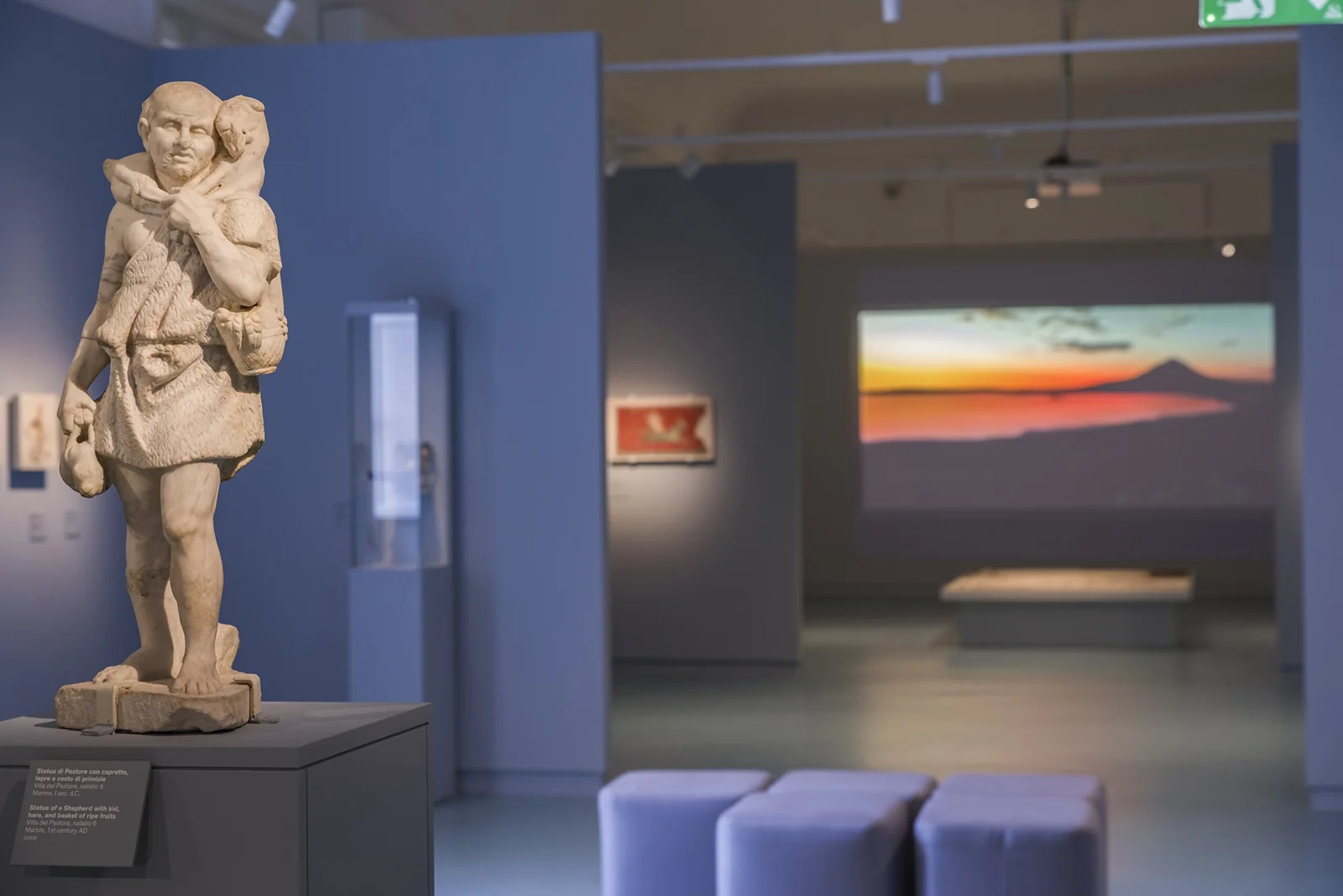
Villa del Pastore
Frescoes and sculptures from the luxurious panoramic residences on the Varano plateau.
Villa di Carmiano
The triclinium with Dionysian paintings, heart of the museum's permanent exhibition.
The Territory
The Ager Stabianus
The museum's multimedia model reconstructs the entire territory of ancient Stabiae: the maritime villas on the Varano plateau, the rustic villas of the hinterland and the connections with Pompeii, Nuceria and the Sorrento coast.
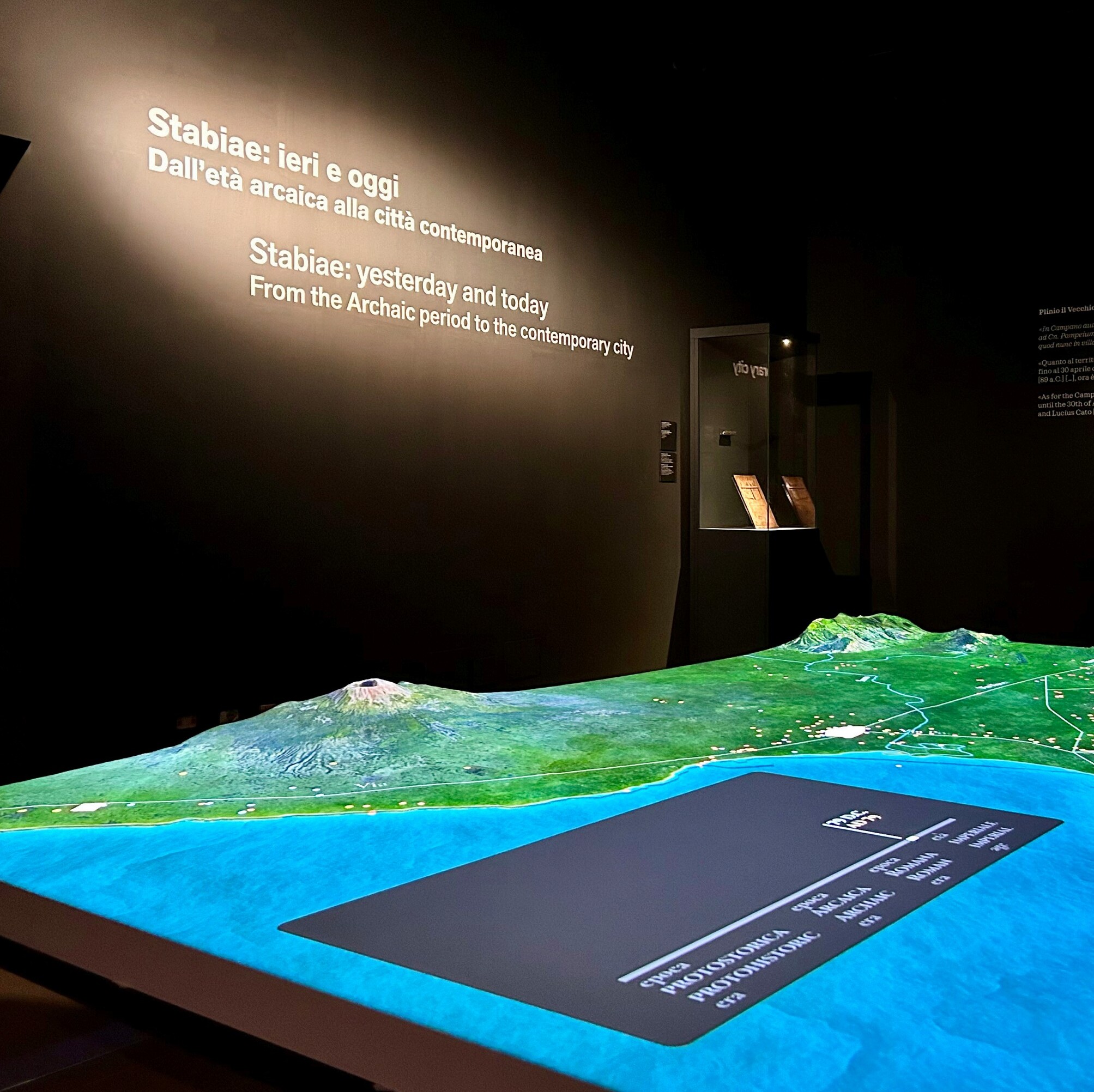
The interactive model allows visitors to explore the Stabian territory with projections simulating the 24-hour cycle of an ancient day.
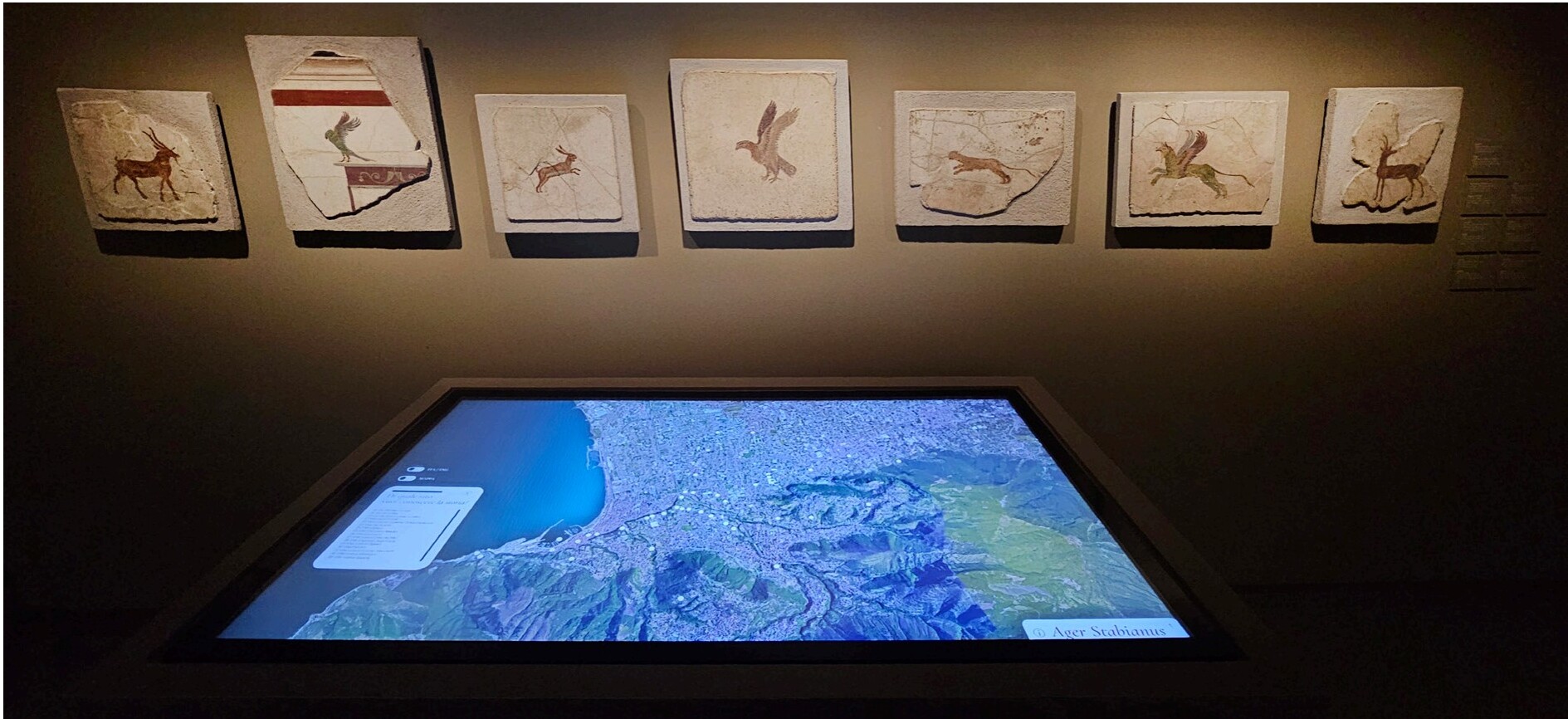
Villa San Marco
11,000 sq m of residential luxury with peristyle, nymphaeum and garden
Villa Arianna
The oldest Stabian villa, with the famous bronze chariot
Villa del Pastore
Refined frescoes from the panoramic Varano plateau
Villa di Carmiano
Triclinium with Dionysian paintings linked to wine production
Gragnano
Rustic villas of the ager with wine presses and storerooms
S. Antonio Abate
Agricultural settlements in the extra-urban territory of Stabiae
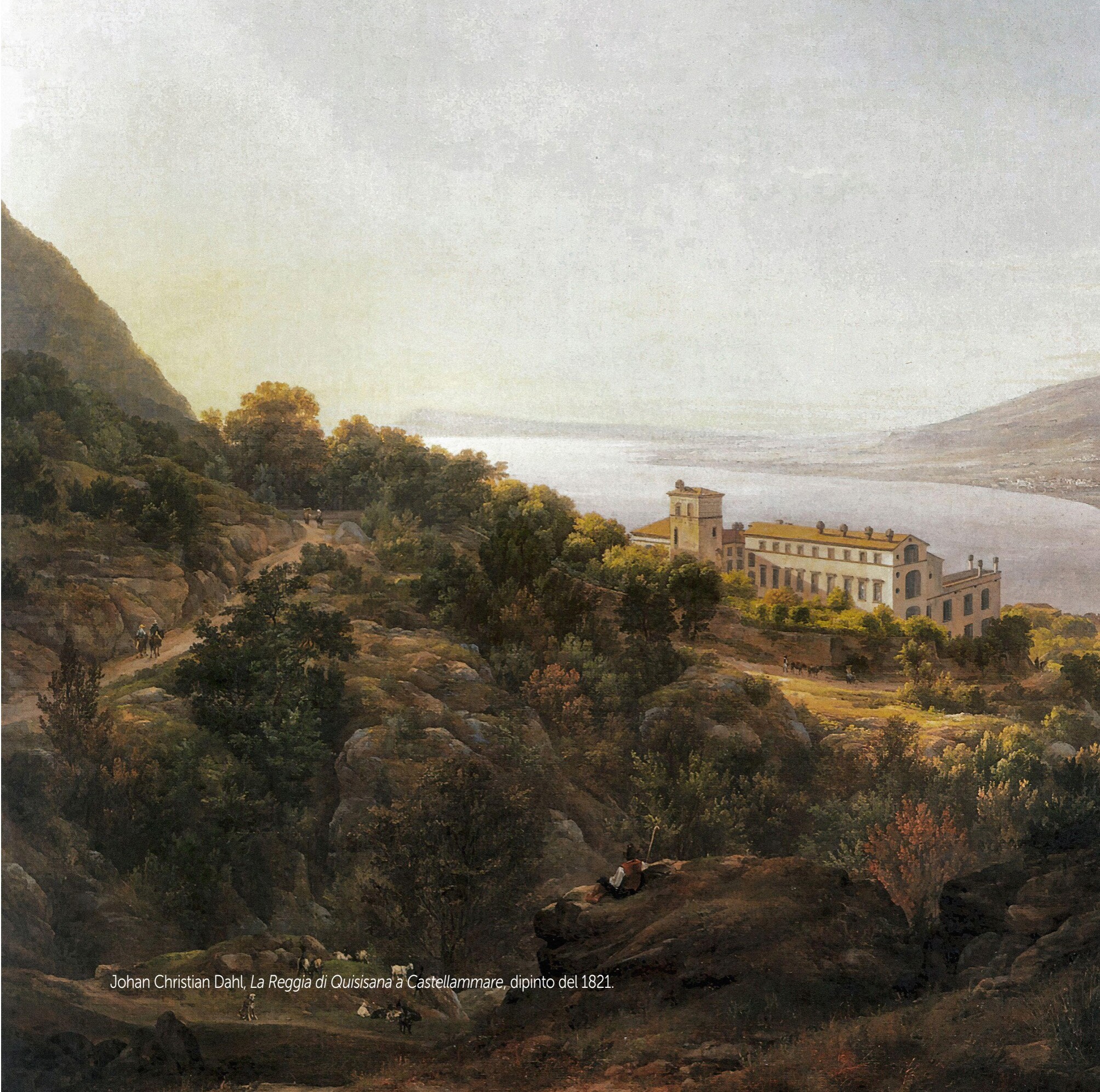
Johan Christian Dahl, Reggia di Quisisana at Castellammare, 1821
The Palace
Reggia di Quisisana
Built in the 13th century by the Angevin rulers as a resort and place of healing, it was the works carried out by Carlo III between 1765 and 1790 that gave the palace its current appearance. The complex, conceived as a "hunting and holiday palace", has an L-shaped structure to enjoy the splendid view of the gulf.
The Palace's fame was such that it attracted many travellers and foreign personalities. Its splendour is attested by the watercolours and engravings of Hackert and Dahl as well as the views of the Posillipo School.
"I have no doubt about it: you have opened a window in your bedroom and have opened up a panorama over the Gulf of Stabiae…"— Cicero, letter to Marcus Marius
The panorama
Overlooking Vesuvius, Ischia and the Bay of Naples, the villas of Stabiae enjoyed an extraordinary panorama. In the museum, the ancient landscape has been faithfully reconstructed and projected in the hall over a 24-hour cycle.
Plan
Visit the Museum
Hours & Tickets
Check times and buy tickets on VivaticketAddress
- Viale Ippocastani
- 80053 Castellammare di Stabia (NA)
- pompei.reggiaquisisana@cultura.gov.it
By train
Circumvesuviana Naples-Sorrento line (Castellammare di Stabia stop), head towards Piazza Giovanni XXIII + Line 5 (Salita Quisisana stop)
How to get here
Bus Line 7
Piazza Giovanni XXIII – Piazza Spartaco – Strada Panoramica (via Panoramica stop)
Check timetable →By car
A3 motorway Naples-Salerno (Castellammare di Stabia exit), take SS145 for 8.5 km (second Castellammare di Stabia exit), continue straight on viale Europa, viale delle Puglie and via Panoramica. Turn left on viale Ippocastani (salita Quisisana).
Learn more
Find out more
Castellammare di Stabia
City tourism portal: events, hospitality and itineraries in the Stabian area.
Visit the siteVillas of Stabiae
The archaeological site of the Roman villas of Stabiae: Villa San Marco, Villa Arianna and the excavations of the area.
Visit the siteDISCOVER MORE
More wonders of Stabia
From Roman villas to eighteenth-century nativity figures: places that tell the story of Castellammare.
Stabia Travel Guide
The city guide: sights, a map, itineraries and useful addresses to experience Castellammare.
Visit the website →
Scavi di Stabiae
Villa Arianna and Villa San Marco, the grand Roman villas overlooking the Bay of Naples.
Visit the website →
Presepe Stabile Stabiano
The historic nativity figures of the Co-Cathedral, on display all year with free admission.
Visit the website →We use cookies
This site uses technical cookies necessary for operation and, with your consent, profiling and third-party cookies to improve your experience. You can accept all cookies, reject non-essential ones, or customise your preferences.